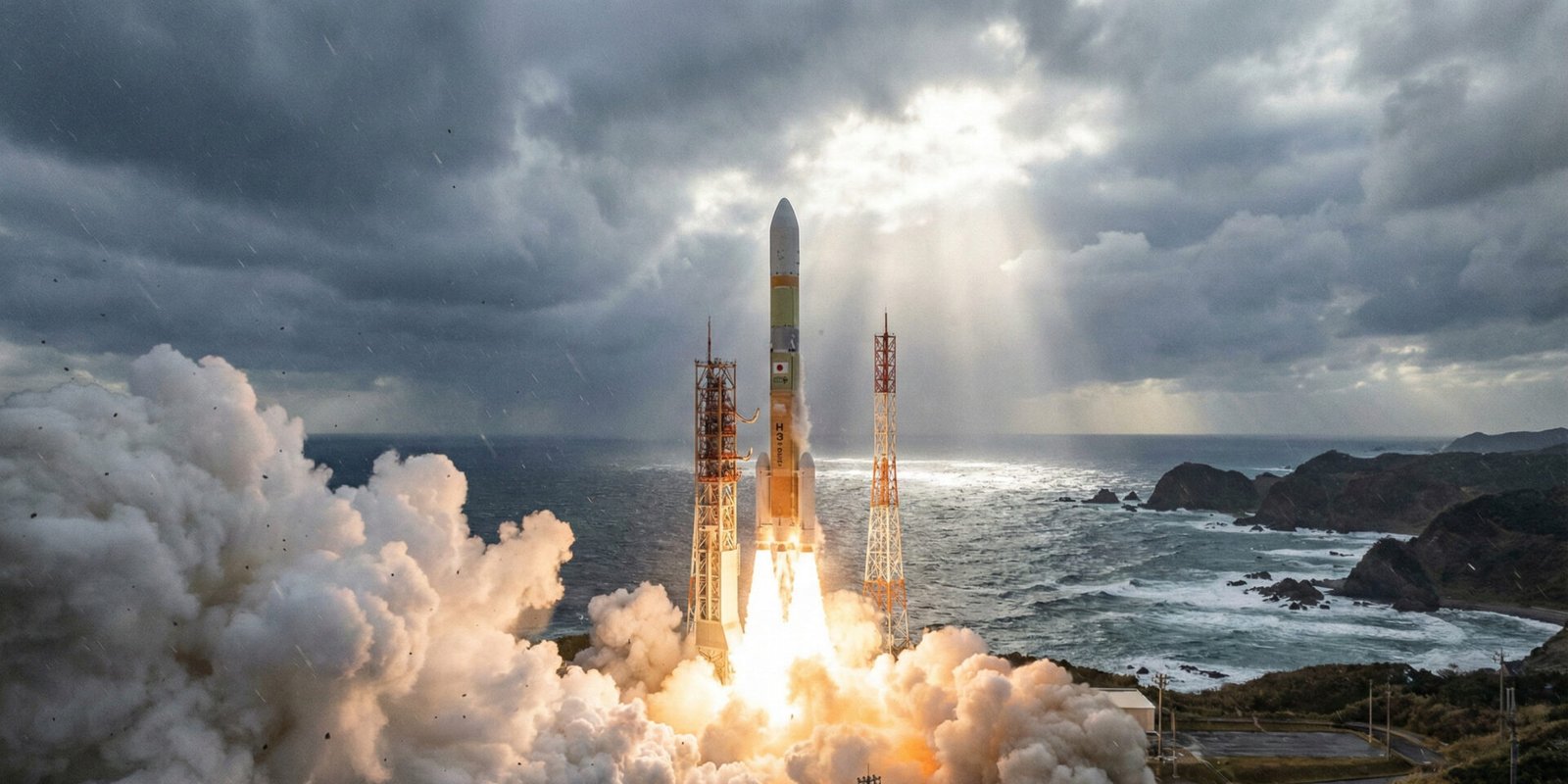
The air at the Tanegashima Space Center is usually thick with a unique blend of salt spray from the Pacific and the electric tension of human ingenuity. But on Tuesday, that tension snapped into a heavy, suffocating silence. Japan’s flagship H3 rocket, the silver-and-white pillar of hope for the nation’s celestial future, failed to deliver its critical payload into orbit.
As the smoke cleared from the launchpad and telemetry screens across the Japan Aerospace Exploration Agency (JAXA) control rooms went dark, the reality began to sink in. This wasn’t just a technical glitch; it was a deeply personal setback for thousands of engineers and a significant strategic hurdle for Japan’s goal of becoming a premier player in the global space economy.
Table of Contents
The High Stakes of the H3 Navigation Mission
The mission, designated to carry a new-generation geolocation and navigation satellite, was meant to be a victory lap. After a rocky development phase and a catastrophic maiden flight in early 2023, the H3 had recently seen a string of successes that suggested the “teething problems” were over.
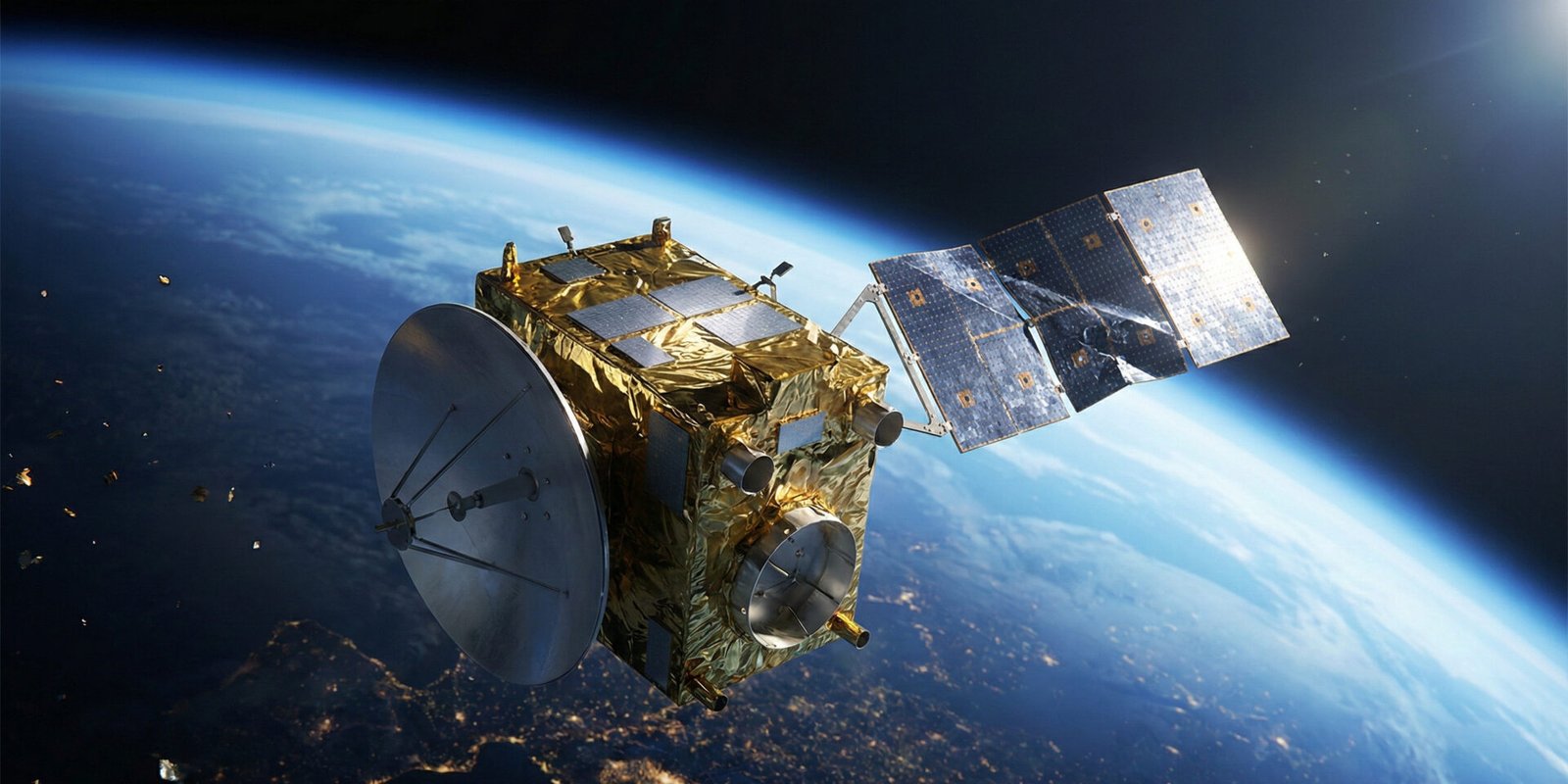
This specific satellite was part of the Michibiki (Quasi-Zenith Satellite System) fleet. For the average person in Tokyo or Osaka, these satellites are invisible guardians of daily life. they provide the centimeter-level GPS accuracy required for everything from automated farming and delivery drones to disaster management in a country prone to earthquakes and tsunamis.
When the H3 failed to reach the necessary velocity to deploy this “eye in the sky,” the loss wasn’t measured just in billions of yen, but in years of lost momentum for Japan’s infrastructure.
A Sequence of Events: When the Engines Fell Silent
The countdown had been flawless. At the Tanegashima Space Center, nestled against the picturesque cliffs of southern Japan, the H3’s LE-9 main engines ignited with a roar that shook the observation decks miles away. For the first few minutes, the ascent looked textbook. The solid rocket boosters separated cleanly, falling away into the ocean like spent matches.
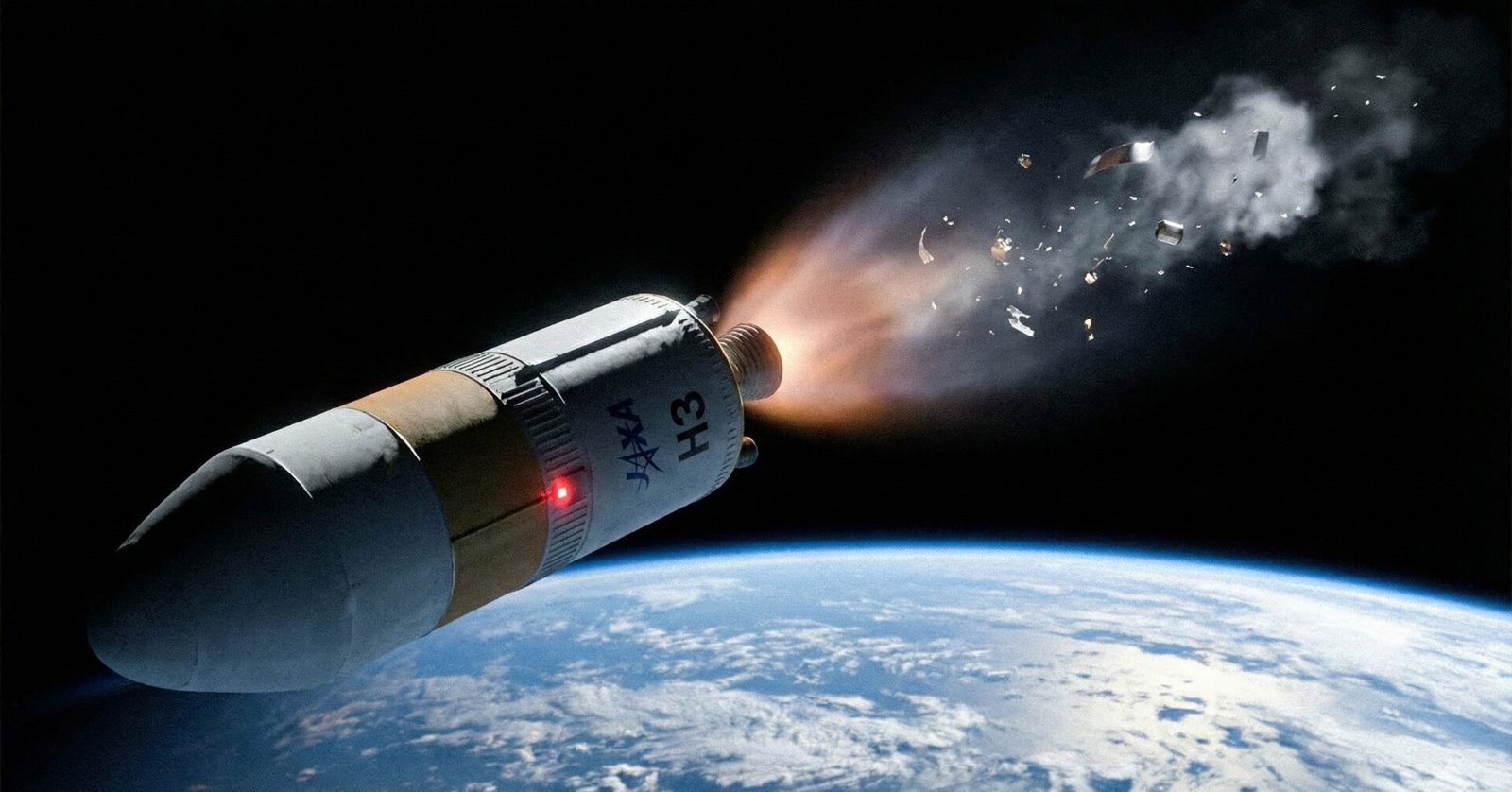
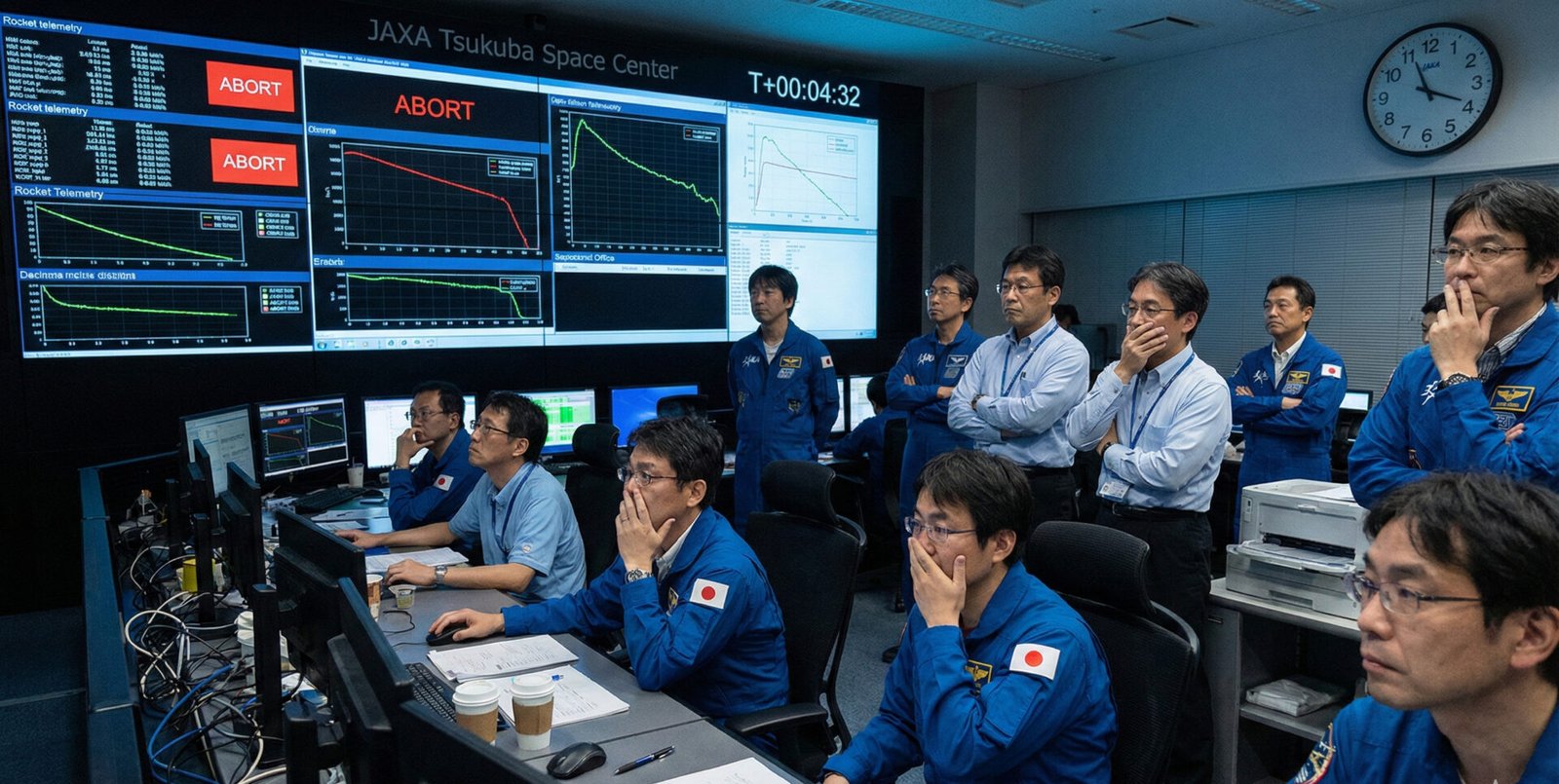
However, the heartbreak occurred during the critical transition to the second stage. According to preliminary reports from JAXA and Mitsubishi Heavy Industries (MHI), the second-stage engine failed to ignite. Without that secondary push, the rocket and its precious cargo were unable to overcome the relentless tug of Earth’s gravity.
Commanders were forced to send a self-destruct signal—a “flight termination” command—ensuring the debris would fall safely into the open sea rather than posing a risk to populated areas. In that moment, years of meticulous soldering, coding, and testing vanished in a controlled explosion over the Pacific.
The Human Element: Beyond the Metal and Fuel
To understand why this failure hurts so much, we have to look at the people behind the project. Rocketry is often described in cold, mathematical terms, but the H3 is a product of human passion.
”We put our hearts into every bolt,” one junior engineer at MHI remarked off the record. For the veteran scientists at JAXA, many of whom have spent their entire careers on the H-series launchers, this failure feels like a personal loss. The H3 was designed to be Japan’s “workhorse”—a cheaper, more reliable successor to the aging H-IIA. It was supposed to be the rocket that proved Japan could compete with the likes of Elon Musk’s SpaceX.
The visual of JAXA officials bowing in apology during the post-launch press conference has become an all-too-familiar sight. It is a gesture of profound accountability, yet it masks the internal devastation of a team that had worked around the clock to ensure this flight would be the one to solidify the H3’s reputation.
Why the H3 Rocket Matters to the World
You might wonder why a Japanese rocket failure makes international headlines. The answer lies in the current “Space Race 2.0.”
Currently, the world is facing a massive shortage of reliable launch vehicles. With the retirement of the European Ariane 5 and the geopolitical exclusion of Russian Soyuz rockets, the global community is desperately looking for alternatives to SpaceX’s Falcon 9.
The H3 was positioned to be that alternative. By using 3D-printed parts and simplified engine designs, JAXA aimed to cut launch costs by 50% compared to previous models. If the H3 fails to prove its reliability, international commercial clients—telecom companies, research institutions, and foreign governments—will continue to flock to the United States, leaving Japan on the sidelines of a multi-billion dollar industry.
The “Curse” of the Second Stage?
This isn’t the first time the H3 has stumbled at this exact hurdle. The maiden flight in March 2023 failed for a nearly identical reason: the second-stage engine didn’t receive the electrical signal to ignite.
After that failure, JAXA spent over a year meticulously redesigning the ignition system. They conducted “stress tests” that pushed components to their breaking points. The successful second and third flights led many to believe the ghost in the machine had been exorcised.
This latest failure suggests that the issue might be more systemic or intermittent than previously thought. Is it a vibration issue? A software logic error? Or a hardware flaw that only reveals itself under specific atmospheric conditions? The investigation will likely take months, and during that time, the H3 fleet will be grounded.
The Resilience of JAXA: A History of Coming Back
If there is one thing the Japanese space program is known for, it is resilience. One only needs to look at the Hayabusa missions. The first Hayabusa probe suffered a series of catastrophic failures, lost contact with Earth, and yet, through sheer engineering “MacGyver-ing,” managed to return samples from an asteroid.
The H3 program will likely follow a similar path. While the headlines today are grim, the data gathered from this failed flight is invaluable. In rocketry, you often learn more from a failure than you do from a success. Every sensor reading taken before the flight termination command is a piece of the puzzle that will eventually lead to a more robust vehicle.
The Economic Ripple Effect
The failure also hits the Japanese economy where it hurts. The H3 is a cornerstone of the nation’s “Basic Plan on Space Policy.” Japan had hoped to use the H3 to capture a larger share of the small-satellite launch market.
Furthermore, the H3 is scheduled to play a vital role in NASA’s Artemis program. Japan has committed to providing cargo resupply missions to the Lunar Gateway (a station that will orbit the moon) using a specialized version of the H3. A grounded fleet puts those international commitments at risk, potentially straining the space-faring alliance between Tokyo and Washington.
What Happens Next?
In the coming days, a government-led task force will sift through terabytes of data. They will look at the thermal signatures of the second stage, the vibration frequencies during stage separation, and the electrical bus logs.
For the public, the wait for the next launch will be a long one. JAXA must not only fix the technical flaw but also rebuild public and political trust. In a world where SpaceX makes rocket launches look “easy,” the H3 failure is a sobering reminder that going to space remains the most difficult thing humans attempt to do.
Final Thoughts: The Cost of Reaching for the Stars
As we look at the empty launchpad at Tanegashima, it’s easy to focus on the loss. But we should also focus on the courage it takes to try. Japan is a nation that has built its modern identity on precision and technological excellence. The H3 rocket is an extension of that identity.
This failure is a detour, not a dead end. The “humanized” reality of space flight is that it is built on a mountain of discarded parts and hard-learned lessons. The engineers will return to their desks, the welders will return to the tanks, and eventually, the H3 will stand tall on the pad again.
The dream of a Japanese-led path to the stars is too important to be grounded by a single failed ignition.
Quick Facts: The H3 Rocket Mission
- Operator: JAXA / Mitsubishi Heavy Industries (MHI)
- Launch Site: Tanegashima Space Center, Japan
- Payload: Michibiki (QZSS) Navigation Satellite
- Primary Issue: Second-stage engine ignition failure
- Mission Status: Failed (Flight termination command issued)