In one of the most dramatic weather events in recent memory, Russia’s remote Kamchatka Peninsula has been entirely transformed into a colossal white desert — not by fiction, but by reality. Satellite imagery from NASA’s Earth Observatory shows a vast swath of this rugged region blanketed in snow so deep and relentless that it’s being described by scientists and locals alike as a snow apocalypse.
From a distance, the images make the peninsula look like a serene winter postcard, but on the ground, residents are struggling with a crisis that has shut down daily life, crippled infrastructure, and forced authorities to respond with emergency measures rarely seen in this part of the world.
In this in-depth report, we explore how this extraordinary winter unfolded, what data and satellite imagery reveal, the impact on communities, and what experts say about the climate forces behind this historic event.
Table of Contents
NASA’s Eye in the Sky: A Frozen Giant Emerges
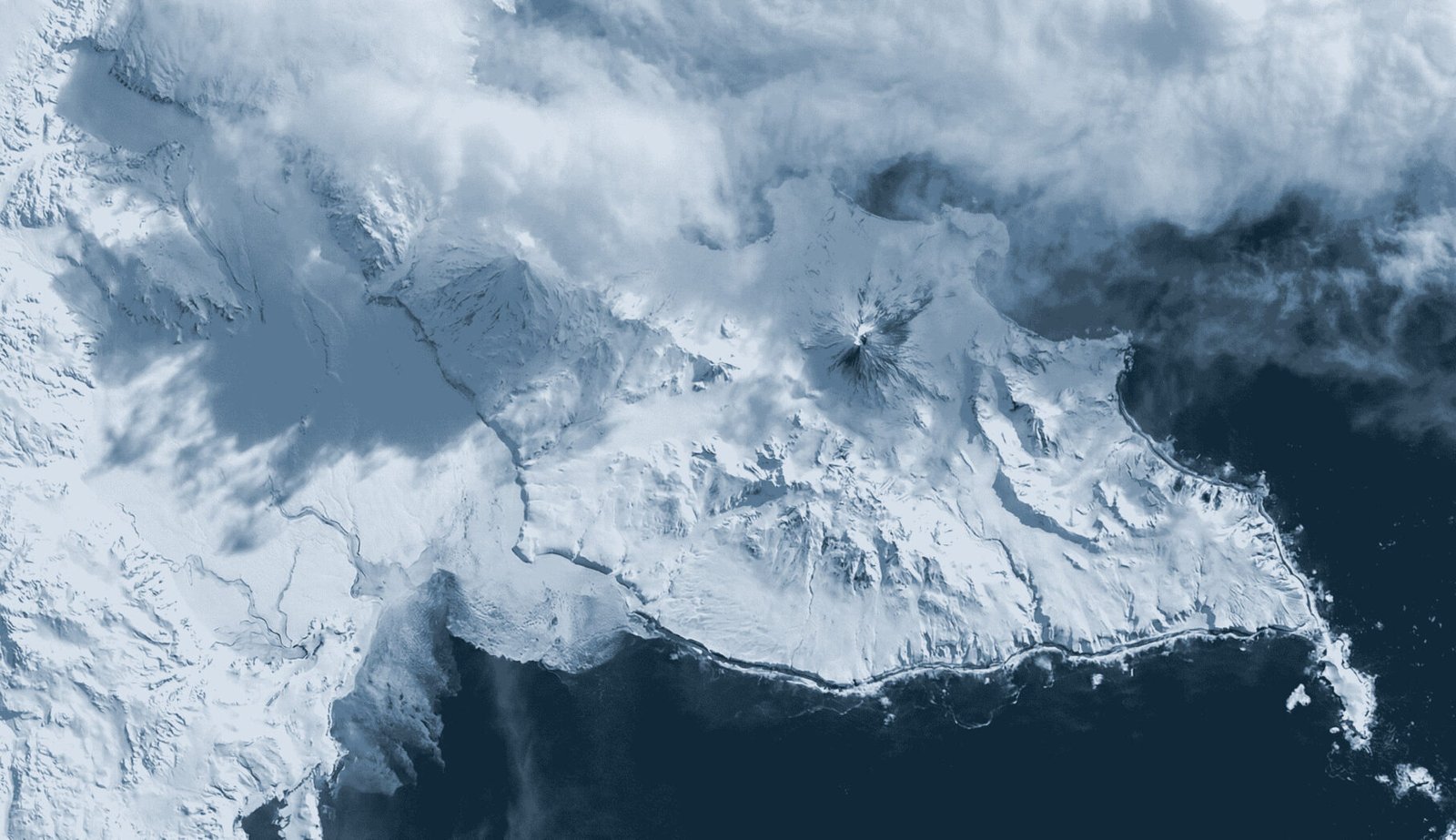
On January 17, 2026, NASA’s Aqua satellite — equipped with the Moderate Resolution Imaging Spectroradiometer (MODIS) — captured images of the Kamchatka Peninsula that sent shockwaves through the meteorological community.
In these high-resolution satellite images, the entire peninsula appears as one unbroken canvas of white. Snow has piled into every valley and crater, cloaking both the iconic volcanic peaks and the windswept coastline. Even the rugged circular summits of Kamchatka’s famous active volcanoes — usually easily distinguishable — are almost indistinguishable under feet of snow.
To scientists accustomed to studying Earth’s climate from space, the images are breathtaking not just for their beauty, but for the stark visual evidence they provide of how intense and prolonged this winter storm has been.
Record Snowfall Statistics: Cold Numbers in a Hot Climate Discussion
Kamchatka is no stranger to harsh winters, but climatologists say the scale of snow accumulation this season is unprecedented in modern records.
According to regional meteorological agencies:
- Nearly six meters (almost 20 feet) of snow has fallen across parts of the peninsula over December and January combined — amounts rarely seen in more than half a century.
- In December alone, the region was hit with roughly 3.7 meters of snow, more than three times the typical monthly total.
- Between January 1 and January 16, additional storms added at least two meters more, with some snowbanks and drifts reaching up to five meters (15+ feet) in local depressions and open spaces.
These figures are being compared to historic snowfall events, with experts noting that nothing like this has been consistently recorded in the region since at least the 1970s.
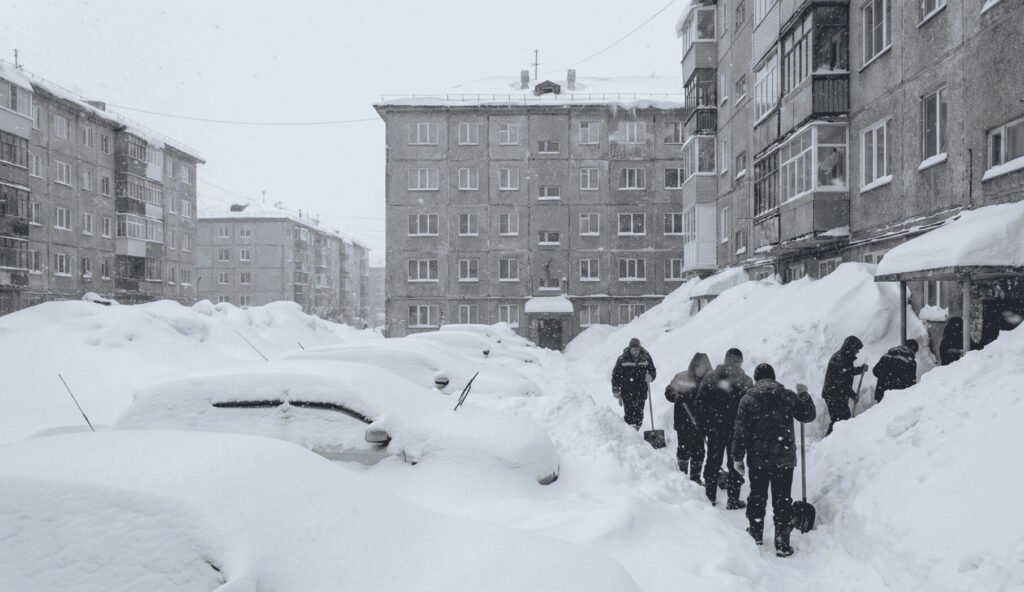
Life on the Ground: From Blocked Roads to Buried Homes
Cars Swallowed, Entrances Lost
In the regional capital of Petropavlovsk-Kamchatsky, a port city of roughly 160,000 people, life has effectively ground to a halt. Snowdrifts tower over cars parked on streets, turning vehicles into frozen relics. Entrances to homes, schools, and businesses are buried, forcing residents to carve out tunnels just to leave their front doors.
Local reports and videos circulating on social media show people chopping at compacted snow to free vehicles, while some have resorted to climbing out of second-story windows into vast white plains below.
State of Emergency Declared
With snow depths in some neighborhoods exceeding 16 feet (nearly 5 meters) and critical infrastructure blocked, local authorities declared a state of emergency in and around Petropavlovsk-Kamchatsky.
The decision was driven not only by the sheer volume of snow, but also by the dangerous consequences: roads impassable, ambulances struggling to navigate, and vital supplies like bread, milk, and fuel running low as delivery routes remain disrupted.
Tragic Toll: Lives Lost in the Snow
Perhaps most heartbreaking are the human tolls of this weather catastrophe. Reports confirm that two people died after snow dislodged from roofs and struck them — a stark reminder that extreme weather carries risks beyond mere inconvenience.
Why Did This Happen? The Polar Vortex and Atmospheric Oddities
Meteorologists point to a chain of atmospheric anomalies that converged to produce this historic deluge of snow.
Weakened Polar Vortex Opens the Floodgates
At the heart of this event is a phenomenon known as a sudden stratospheric warming — an abrupt increase in polar stratospheric temperatures that can weaken the normally stable polar vortex.
Under typical conditions, the polar vortex helps contain extremely cold Arctic air near the North Pole. But when it weakens or becomes distorted, frigid air can spill out into lower latitudes, interacting with moist air from the oceans. When these air masses collide, the result can be intense precipitation — in Kamchatka’s case, devastating snowfall.
The Role of Low-Pressure Systems
Meteorological data also point to repeated low-pressure systems rolling in from the nearby Sea of Okhotsk. These systems — charged with moisture and driven by strong winds — repeatedly swept across the peninsula, each one dumping more snow on top of the last and maintaining conditions favorable for snow buildup rather than melt.
Broader Impacts and Secondary Crises
While Kamchatka’s snowfall has dominated headlines, this weather pattern is part of a larger, interconnected system of extreme events.
Transport Disruptions Across Borders
Heavy snow and frigid temperatures have spilled across national borders, affecting transport and daily life in countries such as China and Japan. Airports reported grounded flights, and road closures were reported across northeastern China due to ice and snow.
Global Weather Extremes Signal Changing Patterns
Across the Northern Hemisphere, weather systems this winter have been unusually volatile. Europe has seen intense rain and flooding events, while some parts of the United States have experienced deep freezes and record snowfalls — all underscoring how dynamic and unpredictable global weather is becoming.
Community and Government Response: Digging Out of Disaster
Facing what some have likened to a frozen siege, both local and federal authorities in Russia have mobilized resources to aid in recovery and snow removal.
Heavy Equipment Deployed from Moscow
Moscow has dispatched military cargo planes carrying heavy snow-clearing machinery to help tackle the drifts. These machines are critical for reopening roads, restoring supply chains, and assisting emergency services in reaching isolated areas.
Local Volunteers and Residents Band Together
In the absence of clear streets, residents have taken matters into their own hands — using shovels, tractors, and sheer manpower to dig out essential pathways. Street communities have become spontaneous task forces, working side by side to uncover entrances, clear sidewalks, and reopen access to basic services.
Despite exhaustion and bitter cold, many locals have tried to maintain humor and solidarity in the face of this challenge, turning snow removal into a communal effort with moments of camaraderie and resilience.
Misinformation and Misleading Media: AI Videos and Misconceptions
One curious side effect of the Kamchatka crisis has been an avalanche of misleading online content, including AI-generated videos and sensationalized portrayals of the snow.
Some viral clips show people apparently sledding down impossibly massive drifts or buildings swallowed by snow up to dozens of stories high. These have been debunked by weather analysts and social media fact-checkers, who note that snow physics and known snow depths simply don’t support such exaggerated scenes.
Experts caution audiences to differentiate between verified satellite imagery and AI-enhanced visualizations that can distort the reality of a weather event, leading to unnecessary panic or confusion.
The Climate Change Question: A Deeper Debate
One unavoidable question arising from this event is whether it’s tied to long-term climate change. Scientists are careful to point out that no single weather event proves or disproves climate change. Still, trends such as a weakened polar vortex, shifting jet streams, and more intense storm systems are consistent with models projecting increased volatility in a warming world.
While definitive attribution studies are still pending, researchers emphasize that a warming Arctic can paradoxically lead to colder, more extreme winter events in certain regions due to disrupted atmospheric patterns.
This underscores a complex and evolving climate reality — one in which local extremes can appear even as global averages rise.
Looking Ahead: Recovery and Resilience
As the immediate crisis begins to wane with calmer weather forecasts, Kamchatka now faces the arduous task of recovery. Snow removal crews will be working around the clock to clear streets and restore supply chains, while emergency services remain vigilant for avalanche risks and additional snowstorms.
For residents who endured weeks of isolation, blocked roads, and the sheer weight of living beneath mountains of snow, the experience will leave a lasting imprint — a stark reminder of nature’s power and unpredictability.
Conclusion: A Winter the World Won’t Forget
From NASA’s satellite lens to the snow-choked streets of Petropavlovsk-Kamchatsky, the story of Kamchatka’s winter is one of extremes — breathtaking in its scale, sobering in its impact.
While the region slowly digs itself free, the world watches and learns, absorbing lessons about atmospheric dynamics, human resilience, and what weather extremes may tell us about our changing planet.
In every sense, this is more than a storm — it’s a historic event that will be studied, discussed, and remembered long after the snow melts.