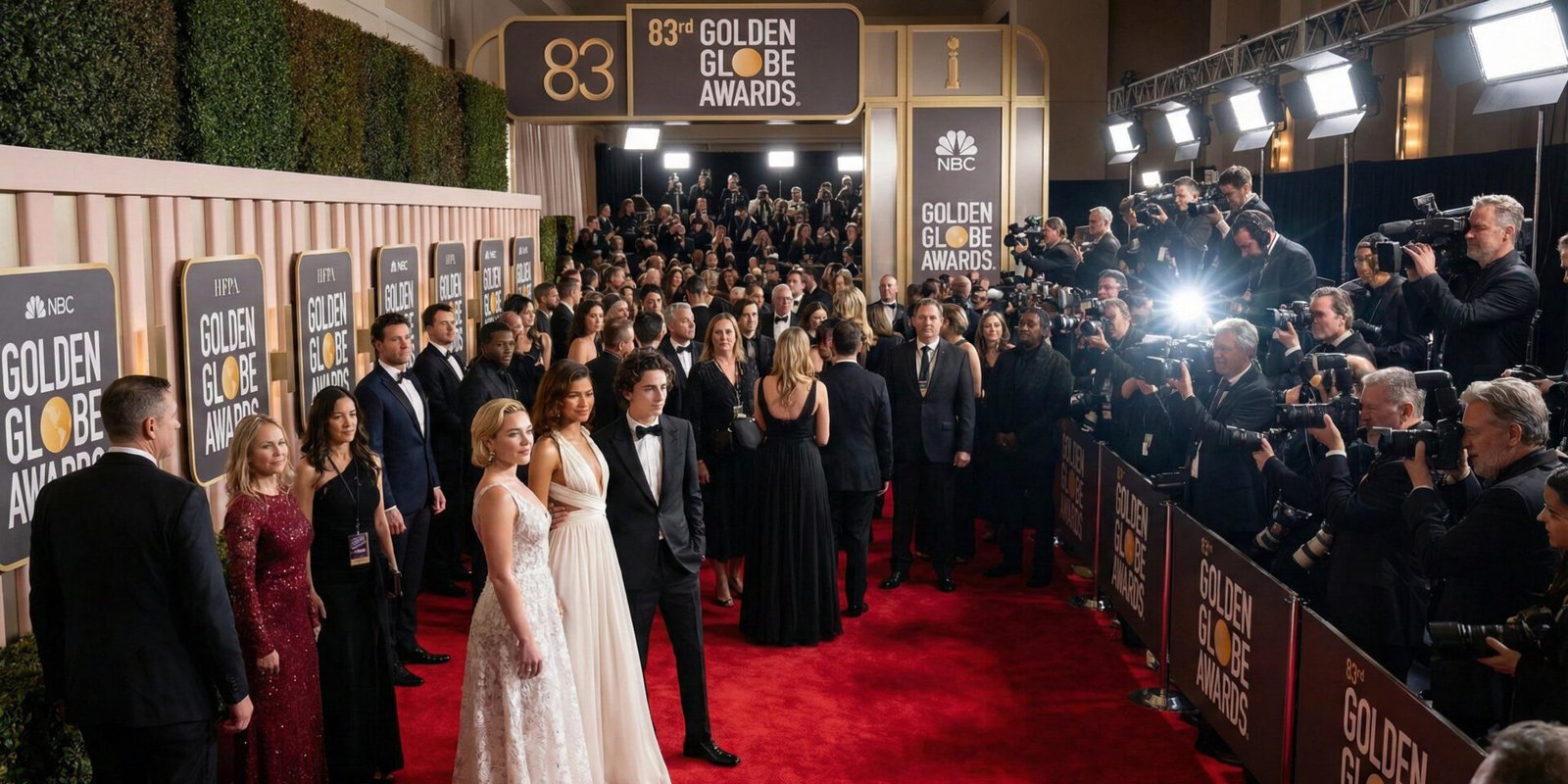
The Golden Globe Awards 2026 were far more than a celebration of film and television excellence. They emerged as a cultural checkpoint for the United States, reflecting how American society, values, and storytelling priorities are evolving in a time of political tension, economic uncertainty, and emotional fatigue. What unfolded inside the ceremony hall was not simply glamour, applause, and trophies—but a broader conversation about identity, responsibility, and the future of American culture.
More than any recent edition, the 2026 Golden Globes felt deeply human. The tone was less rehearsed, less performative, and more reflective. In an era when audiences increasingly demand authenticity from public figures, Hollywood responded by revealing vulnerability, acknowledging mistakes, and redefining what success means in modern entertainment.
Table of Contents
A Ceremony Shaped by a Tumultuous Year
The year leading up to the Golden Globe Awards was anything but calm. The United States faced intense political polarization, ongoing global conflicts, economic pressure on households, and significant labor movements within Hollywood itself. Writers, actors, and production staff had openly challenged studio systems, demanding fair wages, creative protections, and transparency.
All of these realities shaped the atmosphere of the ceremony. Unlike previous years that leaned heavily on comedy and escapism, the 2026 event struck a careful balance between celebration and introspection. The audience was not merely watching an awards show; they were witnessing Hollywood’s attempt to reconnect with the public on a more emotional level.
Timothée Chalamet and the Power of Vulnerability
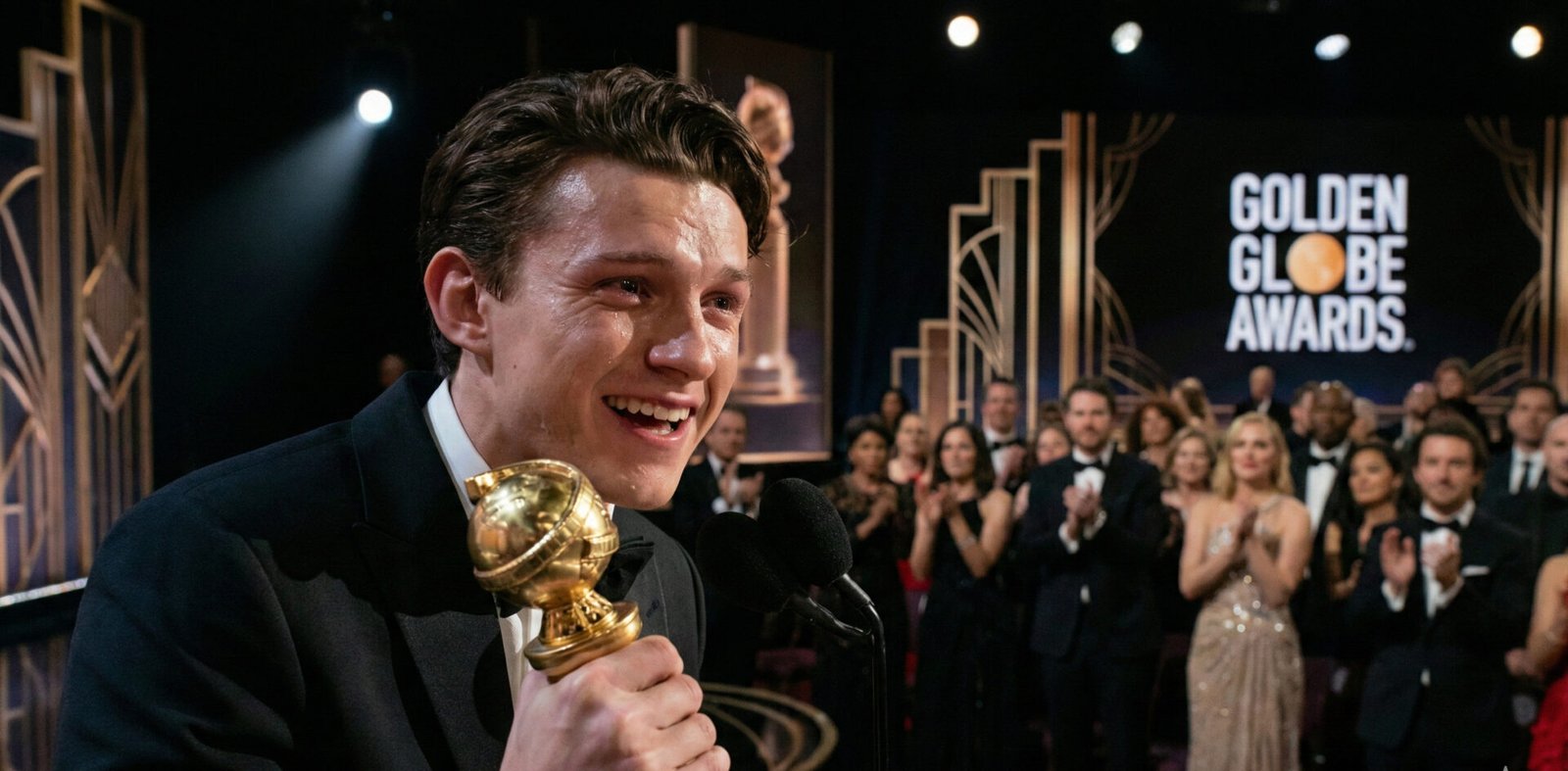
One of the defining moments of the night came when Timothée Chalamet won Best Actor in a Comedy or Musical. His performance was praised for its emotional honesty and subtlety, but it was his acceptance speech that truly captured the nation’s attention.
Rather than delivering a polished, theatrical monologue, Chalamet spoke candidly about self-doubt, creative fear, and the pressure young actors face in an industry driven by constant visibility. He acknowledged the mental health challenges that accompany fame and emphasized the importance of empathy in storytelling.
Within minutes, clips of his speech flooded social media. Viewers across the country described the moment as “refreshingly real” and “deeply relatable.” For many Americans, especially younger audiences, Chalamet’s words symbolized a generational shift—one where masculinity is defined not by dominance, but by emotional openness.
Independent Films Take Center Stage
Another major theme of the Golden Globe Awards 2026 was the dominance of independent cinema. Smaller-budget films, often created outside the traditional studio system, claimed several major awards and critical accolades.
These films focused on:
– Personal identity and belonging
– Immigration and cultural displacement
– Economic inequality
– Family dynamics in a changing society
Audiences have grown increasingly skeptical of formula-driven blockbusters, and the Golden Globes reflected that shift. Viewers responded strongly to stories rooted in lived experience rather than spectacle, signaling a clear change in what American audiences value.
Television’s Continued Cultural Dominance
Television once again proved to be the most influential storytelling medium in the United States. Award-winning series explored themes such as political polarization, digital surveillance, social justice, and immigration—topics that resonate deeply with everyday American life.
Streaming platforms have enabled creators to take risks that traditional networks often avoid. As a result, television has become a space for long-form cultural reflection, allowing complex issues to unfold with nuance and depth.

Fashion as Cultural Expression
The red carpet at the Golden Globes has always been a focal point, but in 2026, fashion carried deeper meaning. Sustainability was a dominant theme, with many celebrities choosing eco-conscious designs and ethically sourced materials.
Designers from historically underrepresented communities were prominently featured, reflecting Hollywood’s evolving commitment to inclusion. Rather than excess and extravagance, the prevailing aesthetic was intentional elegance—a visual reflection of economic awareness and environmental responsibility.
Hollywood’s Global Influence
The Golden Globes continue to function as a powerful instrument of American soft power. Millions of international viewers watched not only to see who won, but to observe the values being projected by the U.S. entertainment industry.
In a world where America’s global image is constantly scrutinized, Hollywood remains one of the nation’s most influential cultural exports. Through storytelling, fashion, and public discourse, the Golden Globes shaped international perceptions of American creativity and openness.
Criticism and Accountability
Despite progress, criticism was not absent. Activists and industry insiders raised concerns about representation gaps, labor inequities, and the concentration of power within elite circles. What set the 2026 ceremony apart, however, was the industry’s willingness to acknowledge these critiques openly.
Presenters and winners addressed these issues directly, signaling a shift toward accountability and transparency. Rather than ignoring controversy, Hollywood leaned into it—an approach that many viewers found refreshing.
Why the Golden Globes 2026 Matter
This year’s ceremony will be remembered not for controversy or ratings, but for tone. The Golden Globes 2026 demonstrated that Hollywood is listening—to audiences, to workers, and to the broader cultural moment.
In a divided nation, shared stories remain one of the few unifying forces. The Golden Globes reminded Americans that art still has the power to heal, challenge, and connect.