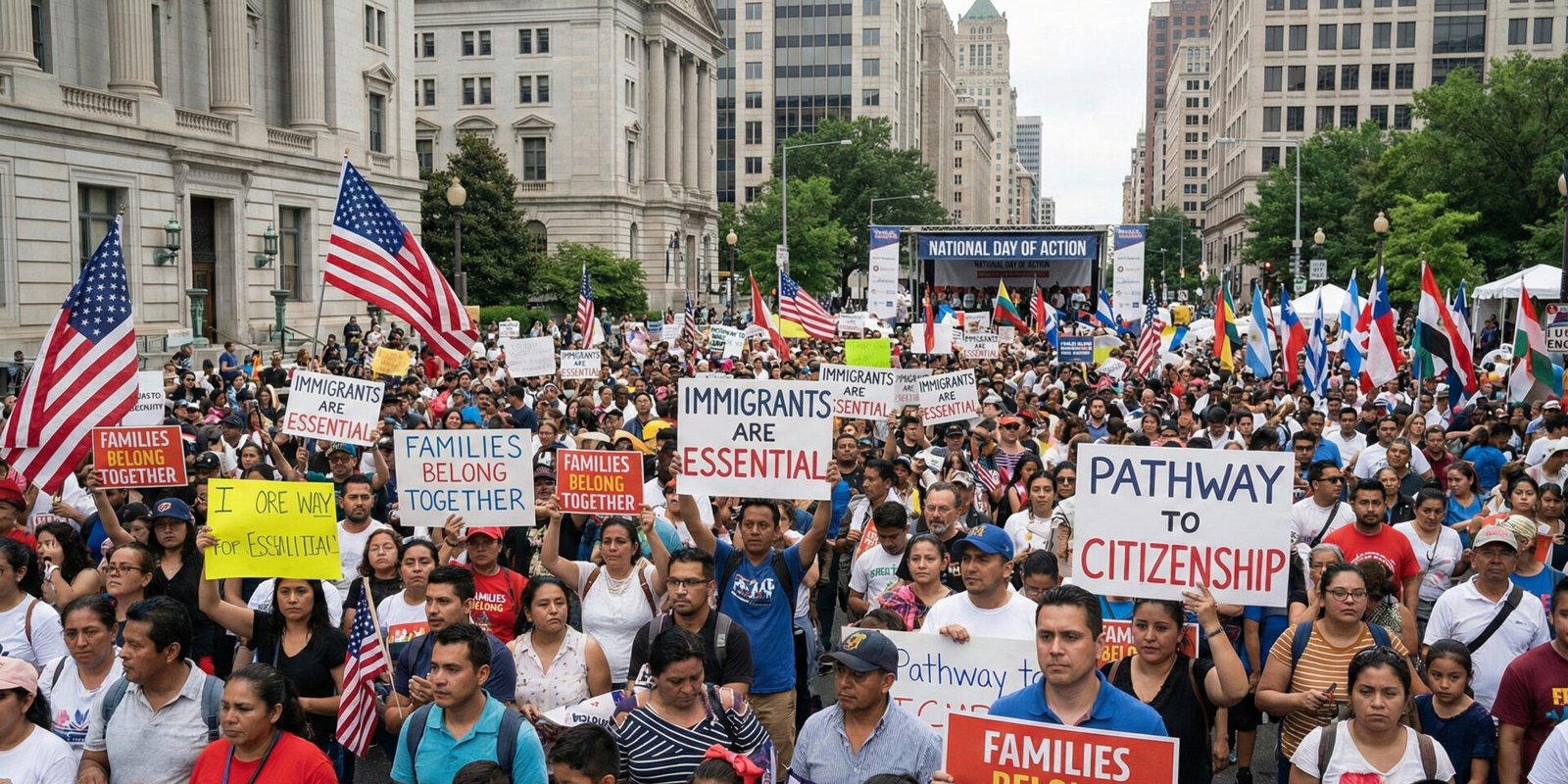
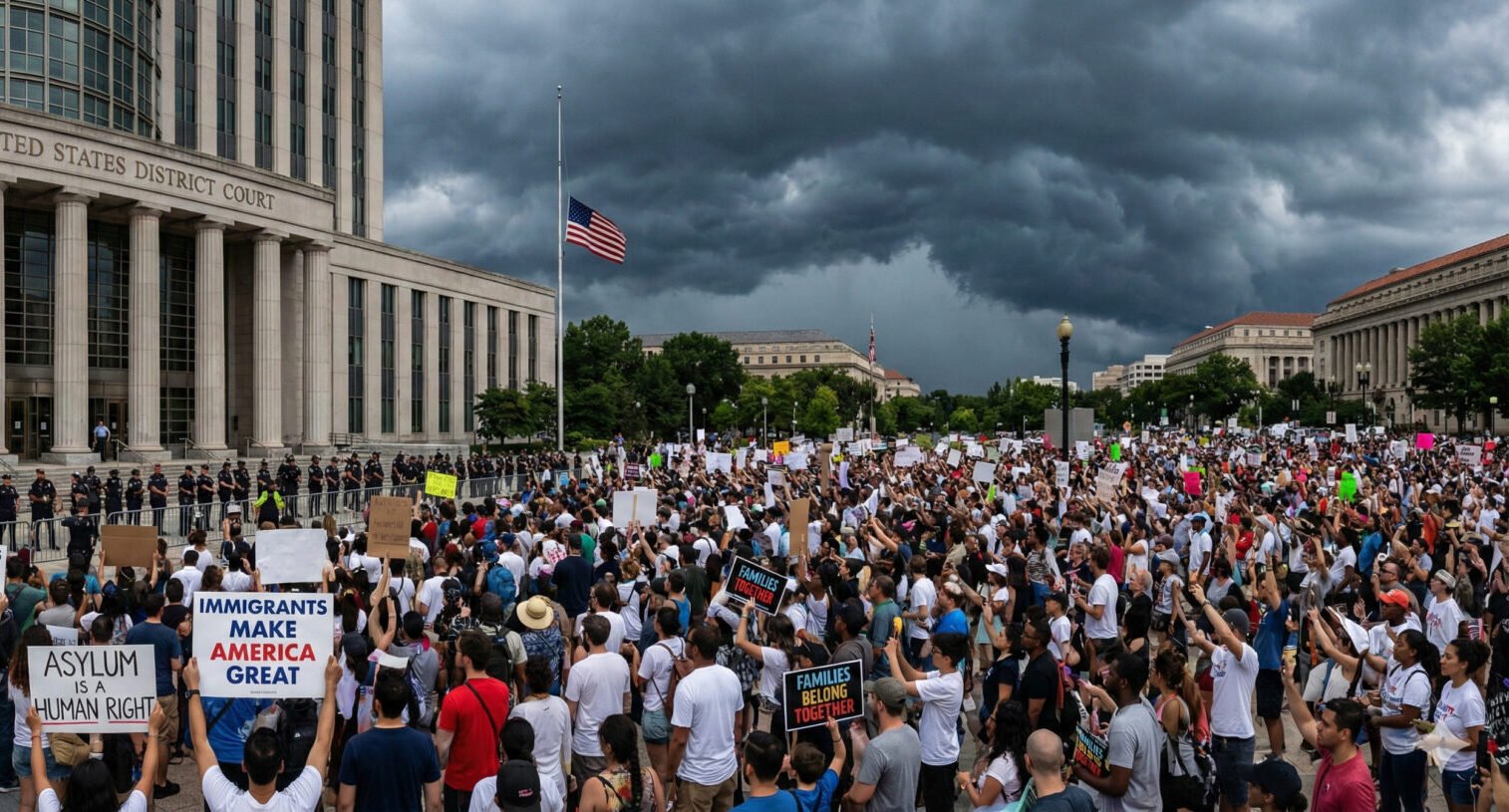
Across cities, campuses, churches, and communities nationwide, immigration has once again become one of the most emotionally charged issues in the United States. A wave of immigration enforcement actions has sparked nationwide protests, drawing attention to the deep divisions shaping American politics and identity.
Unlike previous immigration debates dominated by statistics and policy language, the current movement is driven by personal stories. Families, workers, students, and faith leaders have stepped into the spotlight, transforming immigration into a moral and humanitarian issue rather than a purely legal one.
Table of Contents
What Sparked the Protests
The protests were triggered by a series of enforcement operations targeting undocumented immigrants with no violent criminal records. Videos of arrests—many involving long-term residents and parents of U.S.-born children—spread rapidly across social media platforms.
Public reaction was swift and emotional. Within days:
– Grassroots organizations mobilized nationwide
– Legal defense funds saw record donations
– Faith groups opened shelters and support centers
– College campuses became hubs of protest activity
The Human Stories Behind the Movement
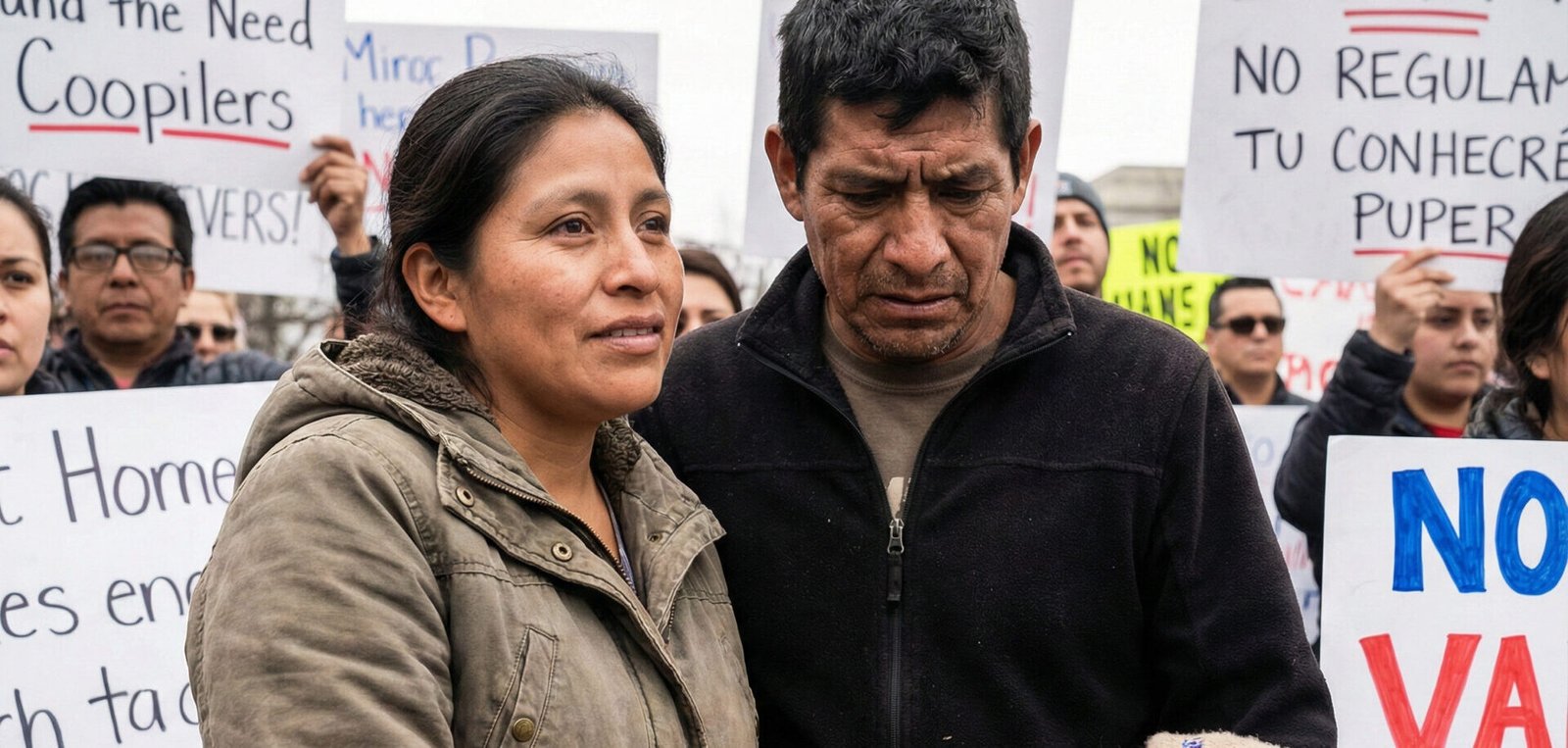
At the heart of the protests are deeply personal stories. Parents who have lived in the United States for decades now face deportation. Children fear returning home from school to find their families gone. Workers who have paid taxes for years live under constant uncertainty.
These stories have reshaped public perception, particularly among younger Americans. For many, immigration is no longer an abstract policy debate—it is a question of dignity, fairness, and national values.
The Federal Government’s Position
Federal officials argue that immigration enforcement is necessary to uphold the rule of law and ensure national security. Authorities emphasize that laws passed by Congress must be enforced and that long-term solutions require legislative reform.
Critics counter that enforcement without reform creates systemic injustice. They argue that aggressive tactics undermine trust in institutions and disproportionately harm vulnerable communities.
State and Local Resistance
Several states and cities have openly resisted federal enforcement efforts. Sanctuary policies have been reinforced, local law enforcement agencies have declined cooperation, and governors have challenged federal authority in court.
This confrontation has raised significant constitutional questions about states’ rights, federal supremacy, and executive power—issues that resonate deeply in American political history.
Economic Consequences
Economists warn that aggressive enforcement could disrupt key sectors of the U.S. economy. Agriculture, construction, hospitality, and healthcare industries rely heavily on immigrant labor.
Labor shortages threaten supply chains, raise consumer prices, and slow economic growth—particularly in rural and service-dependent regions.
Immigration and the Election Cycle
As elections approach, immigration has become a central campaign issue. Conservatives frame enforcement as essential for national security, while progressives emphasize humanitarian reform. Independent voters increasingly express frustration with political gridlock.
Polls suggest Americans are divided but united in dissatisfaction with the current system.
Youth Activism and Digital Mobilization
Social media has transformed modern protest movements. Live-streamed arrests, viral protest footage, and online fundraising campaigns have amplified the immigration debate.
Gen Z and Millennials are leading this movement, redefining civic engagement beyond traditional voting and party affiliation.
America’s Global Image
International observers closely monitor U.S. immigration policies. Human rights organizations warn that harsh enforcement may weaken America’s moral authority, particularly given its historical identity as a nation of immigrants.
What Comes Next
Experts agree the current approach is unsustainable. Possible outcomes include congressional reform, executive action, prolonged court battles, or continued civil unrest.
Final Reflection
The immigration protests sweeping the United States are not just about borders—they are about belonging, identity, and the future of American democracy. How the nation responds may define how history remembers this era.