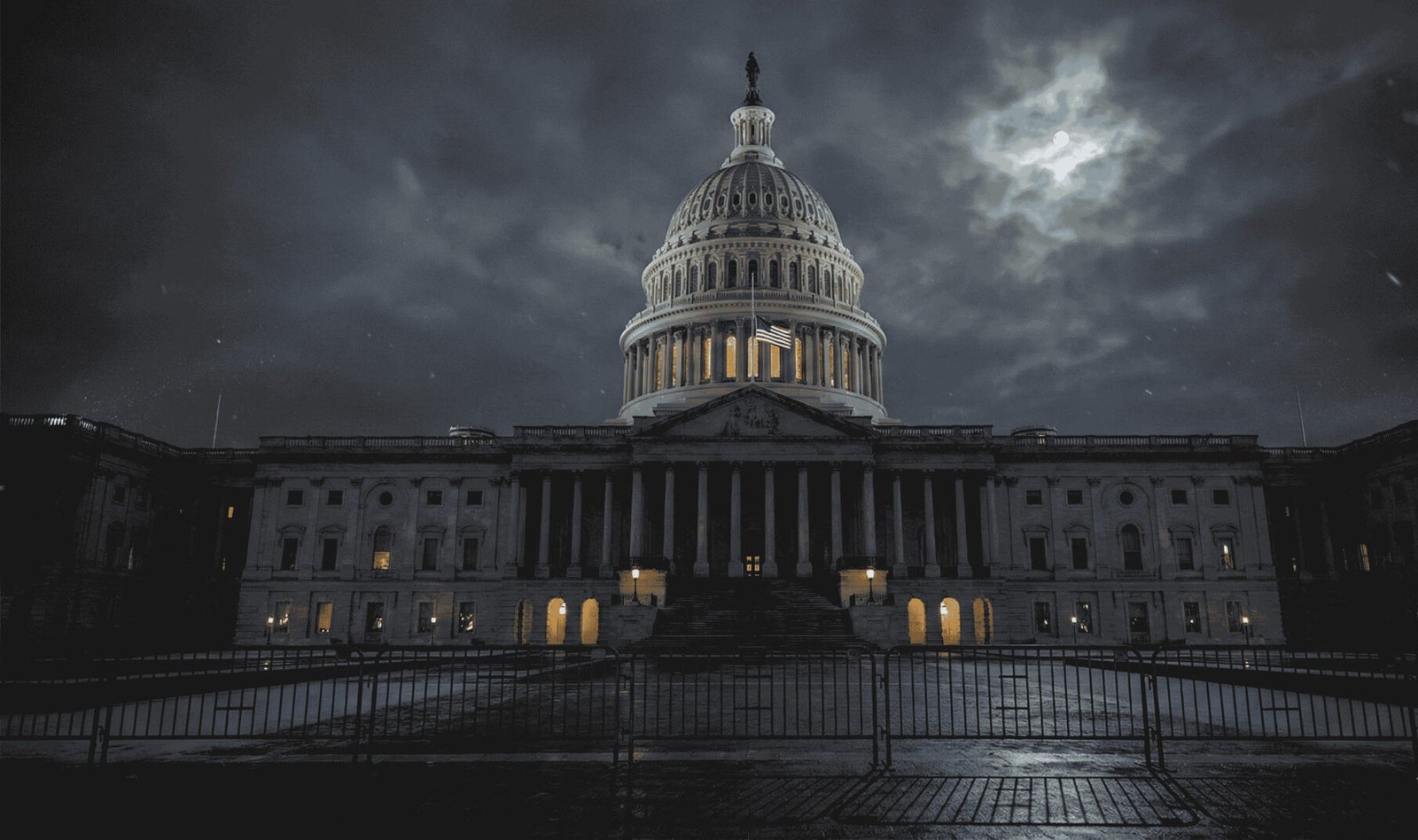
Washington, D.C. – January 31, 2026
In a dramatic turn of events that has captivated the nation’s attention, the United States federal government officially entered a partial shutdown early Saturday morning, marking the second time in just a few months that lawmakers failed to keep all federal agencies fully funded. The shutdown — triggered by a failure in Congress to pass a complete package of spending bills before the midnight deadline — has sent ripples of uncertainty through Washington and across the country.
At the heart of the standoff are deep divisions over funding for the Department of Homeland Security (DHS) and intense political disagreements over immigration policy — a contentious issue that has animated lawmakers and voters alike.
Table of Contents
What Happened: A Deadline Missed as Congress Fails to Act
As the clock struck midnight on Friday, funding authority for several major federal departments expired, triggering automatic shutdown procedures. Although the U.S. Senate had approved a broad government funding bill the evening before, the House of Representatives — controlled by Republicans — did not take up the measure before lawmakers left town for a brief recess. With the House scheduled to return at the start of the workweek, the funding lapse became unavoidable, officially beginning the shutdown at 12:01 a.m. Saturday.
House Speaker Mike Johnson has publicly assured Americans that he is confident the legislative impasse will be resolved quickly, promising that the House will pass an updated funding plan by Tuesday to reopen the government. His approach would see most government agencies funded through the end of the fiscal year, with continued negotiations over DHS funding and immigration reforms to follow.
However, House Democratic leader Hakeem Jeffries has countered that his party will not help fast-track the Senate’s package, which stymies efforts to end the shutdown quickly. Jeffries’ office said Democrats will hold firm in negotiations, making the duration of the closure uncertain.
Why It Happened: The Immigration Funding Divide
The fail point for this latest shutdown was a sharp split between the Houses of Congress over how to fund the Department of Homeland Security (DHS), which oversees agencies such as Immigration and Customs Enforcement (ICE) and the Transportation Security Administration (TSA).
The Senate had reached a bipartisan deal that would fund most federal agencies through September while carving out DHS funding into a separate bill that could be debated for an additional two weeks — a compromise intended to buy more time for negotiation on immigration issues.
But in the House, conservative Republicans and Democratic lawmakers failed to agree on how to move forward. Many Republicans resisted separating DHS funding, and Democrats insisted on accountability measures tied to immigration enforcement as a prerequisite for additional funding.
The divide stems in part from anger among many Democrats over controversial immigration enforcement actions carried out by federal agents in recent weeks, including the fatal shooting of civilians in Minnesota — incidents that have galvanized policymakers on both sides of the aisle to rethink oversight of federal immigration agencies.
What Agencies Are Affected — And What Still Works
This is not a full government shutdown; in fact, many federal departments continue normal operations thanks to funding that was signed into law earlier in the fiscal year. But dozens of agencies and key functions are now affected by the lapse in appropriations.
Shut Down or Limited
• Defense Department: Non-essential activities will halt; some operations may continue without pay.
• Transportation: Air traffic control and other transportation services could operate without pay until funding resumes.
• Health and Human Services (HHS): Research grants and discretionary programs may pause.
• Education, Labor, Housing and Urban Development: Many services will be limited or paused.
• State Department: Some functions like passport and visa processing will continue, but other services may slow.
Continuing Operations
• Social Security, Medicare, and Medicaid: These programs remain funded through separate financing mechanisms and will continue unaffected.
• Veterans Affairs, Agriculture, Interior, Commerce: These departments are already funded for the year and remain open.
• Postal Service: Self-funded through revenue and remains operational.
The Real-World Impact: From Federal Workers to Everyday Americans
Although this shutdown is expected to be more limited and shorter than the record 43-day closure last fall, it still carries tangible effects for federal workers and the public.
Federal Workers
Hundreds of thousands of federal employees could face furloughs — unpaid temporary leave — as agencies without funding halt operations. Essential personnel, such as TSA agents, air traffic controllers, and active duty military members, will continue to work but without pay until funding resumes.
For workers living paycheck to paycheck, even a short shutdown can cause financial stress, forcing families to delay bill payments, miss rent, or alter daily life decisions.
Travel and Transportation
Air travel is often one of the earliest sectors affected by shutdowns. With the Transportation Security Administration (TSA) and air traffic control operating without guaranteed pay, there’s a risk of flight delays, longer security lines, or staff shortages — particularly if the shutdown extends into the week.
Disaster Response and Public Safety
While agencies like FEMA have reserve funds to respond to emergencies — for example during the current widespread winter storms — other functions such as flood insurance processing or new disaster declaration paperwork could be delayed if the shutdown lingers.
Government Services and Public Programs
Many discretionary programs and updates could be put on hold — from federal research grants to educational initiatives and new public health campaigns. These effects accumulate over time, especially if the shutdown extends beyond a few days.
Political Fallout: Negotiations, Partisan Pressures, and Public Reaction
The government shutdown has already intensified political pressure on lawmakers on both sides.
Republican Strategy and House Dynamics
House Speaker Mike Johnson has emphasized a desire to avoid a prolonged shutdown and push for a quick funding vote by Tuesday, followed by continued discussions on immigration provisions. But gaining unified support within his party is challenging, as conservative members want stronger policy outcomes on border security before approving additional funding.
Democrats and Immigration Reform Demands
Democrats remain firm that their support for funding should include enhanced accountability measures for immigration enforcement, such as body cameras for agents and clearer conduct standards. Their position is rooted in recent high-profile incidents involving federal immigration agents.
This strategy has drawn both applause and criticism, with supporters lauding a focus on human rights and oversight, and critics arguing that essential government operations should not be held hostage to broader policy battles.
Historical Context: Shutdowns Aren’t New — But They Hurt
Government shutdowns have occurred periodically in recent decades, typically when Congress fails to pass funding legislation on time. While some shutdowns have been short and largely symbolic, others — such as the 2018-2019 closure — lasted over a month and had widespread economic and social consequences.
Even relatively short funding lapses can erode public trust in government, slow economic activity, and strain federal services already stretched by global challenges, natural disasters, and ongoing social needs.
What Happens Next: Can Lawmakers End the Shutdown Soon?
All eyes now turn to the House of Representatives, which returns to session early next week. The political calculus for Speaker Johnson and Democratic leaders alike will hinge on who blinks first in the negotiation over DHS funding and immigration policy.
If the House can pass the Senate-approved funding package — potentially with amendments — and send it to the President’s desk, operations could resume as early as Tuesday. But if partisan gridlock persists, the shutdown could extend further into next week, deepening its financial and political toll.
Conclusion: A Nation Watching as Politics Affect Governance
The partial government shutdown underscores how deeply intertwined policy disputes, political strategy, and everyday governance have become in Washington.
From federal employees worried about paychecks, to travelers facing potential disruption, to families monitoring the broader implications for essential services, the impact is both immediate and personal.
Whether lawmakers can find a compromise and reopen the government quickly remains uncertain, but one thing is clear: the stakes are high, and the country is watching as its leaders grapple with one of the most fundamental responsibilities of governance — keeping the government open and operational.